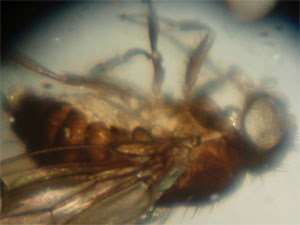
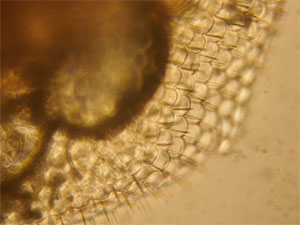
Resolution of John Cuff Microscope No. 18; Fruit Fly
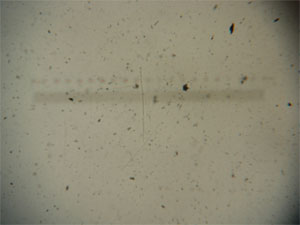
Resolution - Cuff microscope Scale bar
Microscope No. 18. Chromatic aberration, difficult focusing, low magnification. Appx 78x. Resolution is better, but you cannot see bristles between eye lenses, only around the compound eye. This is reflected light because the scope has poor transmitted light. Axial alignment is extremely poor, so light from substage mirror misses the objective.
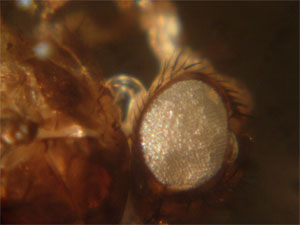
Resolution of Leica Microscope No. 188; Fruit Fly
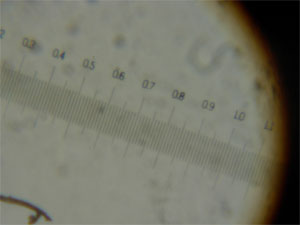
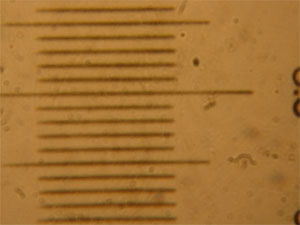
Resolution - Leica No. 188 Scale bar
Microscope No. 188. No chromatic aberration, coarse and fine focus, very good condenser for even illumination, high magnification. Mag appx 350x. The bristles between lenses can be resolved. Stage micrometer: 10µm between shortest bars.
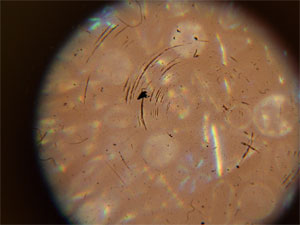
Resolution of Microscope No. 276; Lens Grinding marks
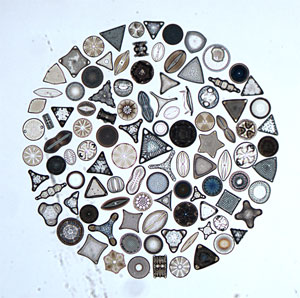
Resolution - Diatoms 2.5x Modern microscope
This is a picture of diatoms taken through Microscope No. 276. Look at the lens grinding marks found on the objective lens. Refraction through scratches from the circular grinding motion produce the black arcs you see here. Note also the poor imaging of the diatoms. Aberrations like this (chromatic, vignetting, low mag, light loss) were common in lenses of this era (pre 18thC). Scratches, bubbles, soot, etc are the cause of this poor lens quality.
Right is a low mag (2.5x) pix of the diatom circle using a modern compound microscope.